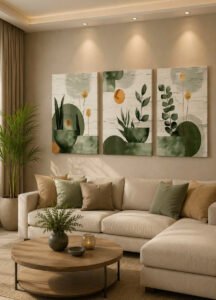
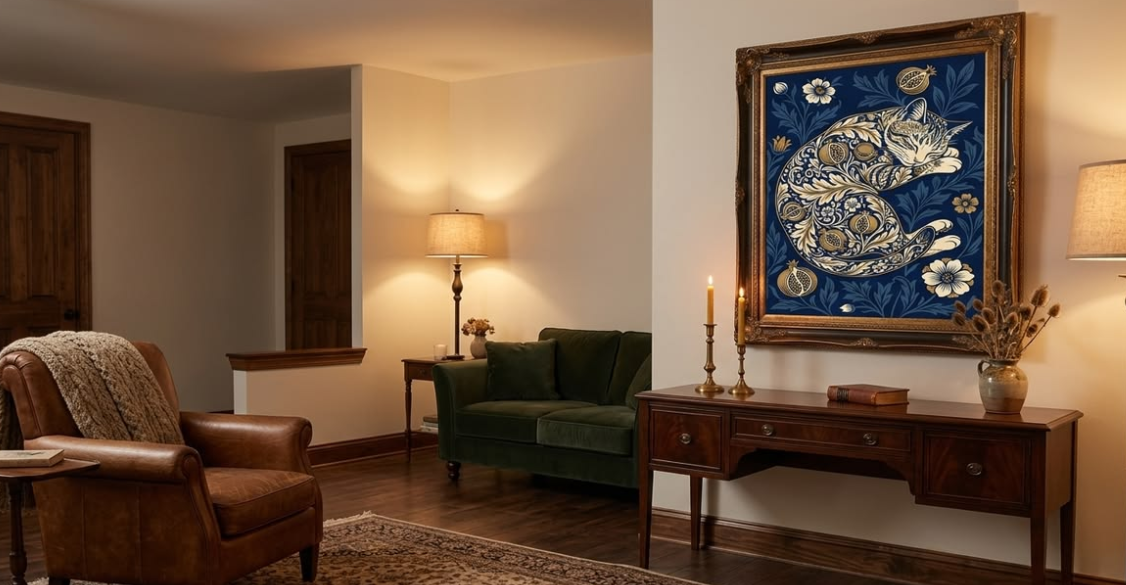
Page 1: Defining Your Aesthetic and Room Vibe✨
The foundation of great interior design starts with understanding the mood you want to create. Wall art is the most impactful way to tie a room together, but it needs to harmonize with your existing decor. Take a step back and evaluate your space’s color palette and furniture layout. If you lean towards a minimalist home decor style, consider selecting large, single-statement pieces with abstract designs or muted, neutral tones that add texture without visual clutter.
For a more eclectic or bohemian room, vibrant colors and mixed-media artworks can serve as excellent focal points. A pro tip for beginners is to use the “color matching” technique: find a painting that features one or two subtle accent colors already present in your throw pillows, rugs, or curtains to create a cohesive, professionally designed look.
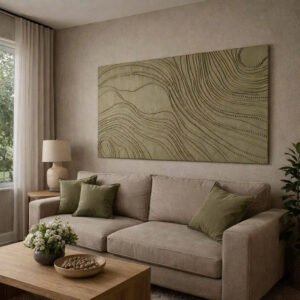
Page 2: Mastering Scale and Sizing Rules
One of the most common decorating mistakes is hanging art that is too small for the wall, resulting in the dreaded “postage stamp” effect. When buying art for the US market, sizing is everything. As a general rule, your wall art should take up about 60% to 75% of the available empty wall space (the area not covered by furniture or moldings).
If you are hanging a painting above a piece of furniture like a sofa, bed, or console table, the artwork should be between 2/3 and 3/4 the width of the furniture. For example, if your sofa is 84 inches wide, your art piece (or gallery grouping) should ideally be about 56 to 63 inches wide. Don’t be afraid to go big; oversized canvas prints often make a room feel larger and more intentionally designed.
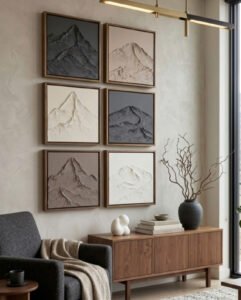
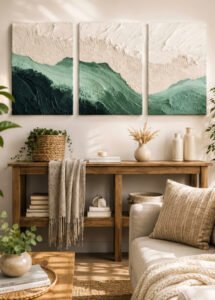
Page 3: Selecting the Right Mediums and Formats🖼️
The material your art is printed on dramatically changes the vibe of the room. Here are the most popular formats to consider for your space:
-
Canvas Prints: Classic and versatile. Canvas adds a slight texture, eliminates glare from windows, and works beautifully for both classic paintings and modern photography. Look for gallery-wrapped edges for a clean, frameless look.
-
Framed Fine Art Prints: Adding a solid wood or sleek metal frame gives artwork a polished, museum-quality finish. Black or white frames suit modern spaces, while natural oak pairs perfectly with Scandinavian or minimalist interiors.
-
Gallery Walls: If you can’t choose just one piece, curate a gallery wall. Mix and match different frame sizes, typography prints, and small paintings. To keep it cohesive, stick to a unifying element, such as using all black frames or a consistent color filter across all images.
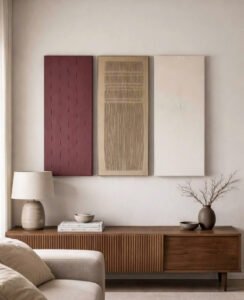
Page 4: Expert Placement and Installation Tips
Even the most expensive painting can look awkward if hung incorrectly. The golden rule of art placement is to hang pieces at eye level. This generally means the center of the artwork should be exactly 57 to 60 inches from the floor. When hanging art above furniture, leave about 6 to 8 inches of breathing room between the bottom of the frame and the top of the furniture piece. Before drilling any holes, trace your frames onto craft paper, cut them out, and tape them to the wall using painter’s tape. This allows you to visualize the layout and make adjustments easily. Finally, invest in the right hanging hardware. While traditional nails work for lightweight prints, heavy framed pieces require heavy-duty drywall anchors or French cleats to ensure they remain securely on your wall.